Anúncios
November 2025 Bitcoin Crash: Overview and Causes
The November 2025 Bitcoin crash was driven by market manipulation, heavy liquidations, and a broad risk-off mood affecting high-beta assets worldwide.
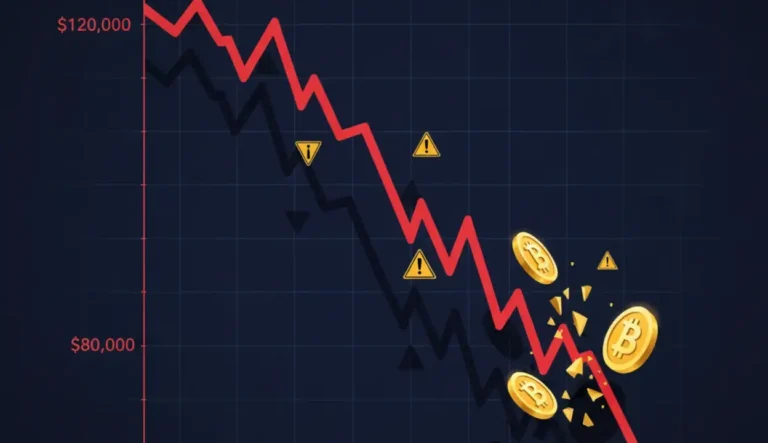
Bitcoin plunged from above $120,000 to the low $80,000s due to forced margin calls, retail capitulation, and institutional sell-offs, wiping out many 2025 gains.
Anúncios
Contrary to expectations, Bitcoin moved like a risky asset rather than a hedge, shaken by macro uncertainty and changing investor dynamics.
Price Collapse and Key Market Events
A coordinated hype campaign earlier in the fall pumped retail interest, leading to overleveraged long positions vulnerable to a swift downturn.
Anúncios
The price cracked triggering cascading forced liquidations and massive sell orders, accelerating the crash amid panic selling.
Policy Shocks and Market Liquidity Crisis
Global macro uncertainty and policy tightening spurred risk aversion, reducing liquidity and amplifying downward pressure on crypto markets.
ETF outflows surged as institutional investors exited, draining liquidity and exacerbating price declines across cryptocurrencies.
Retail Leverage and Hype Cycle Impact
Retail traders heavily leveraged their positions following social media-driven hype, which collapsed rapidly, triggering massive margin calls.
This hype and subsequent deleveraging catalyzed a negative feedback loop, deepening the crash and shaking confidence in Bitcoin.
Impact of the Crash on Bitcoin ETFs
The November 2025 Bitcoin crash triggered record ETF outflows, with U.S. spot ETFs losing nearly $3.8 billion in net redemptions during the month.
Massive sell-offs by ETF issuers added substantial price pressure on Bitcoin, amplifying the market downturn as forced liquidations accelerated.
Investor sentiment shifted sharply from optimism to fear, with the crash fueling widespread risk aversion among institutional ETF holders.
Record ETF Outflows and Price Pressure
Bitcoin ETFs, led by major players like BlackRock’s IBIT, faced massive outflows, forcing large Bitcoin sales and depressing prices further.
These outflows contributed to a vicious cycle, where redemptions drove Bitcoin price declines, which in turn triggered more ETF selling pressure.
Investor Sentiment and ETF Volatility
The crash confirmed bearish technical indicators, pushing investors from bullishness to cautious risk reduction in ETF portfolios.
Heightened volatility characterized ETF trading, reflecting uncertainty and a growing preference for de-risking amid macroeconomic concerns.
Shift from Optimism to Risk Aversion
Investor confidence dropped rapidly as ETF flows reversed, highlighting a market-wide shift towards risk aversion throughout November 2025.
Despite losses, some investors began cautiously re-entering near lower price points, indicating selective appetite amid broader fear.
Long-Term ETF Market Implications
The crash may increase Bitcoin ETF price sensitivity to flows, influencing volatility as institutional participation grows in the asset class.
Market dynamics could evolve with potential rotations into altcoin ETFs and renewed institutional interest when conditions stabilize.
Effect on Crypto Stocks Holding Bitcoin Treasuries
Crypto companies holding Bitcoin faced massive unrealized losses and valuation squeezes amid the November 2025 crash. Many were forced to sell holdings.
Equity prices plunged as treasuries lost value, compressing premiums to NAV and limiting firms’ ability to raise capital through share issuance.
Leverage and debt obligations pressured firms into defensive selling, further depressing prices and intensifying financial stress on treasury companies.
Stock Price Declines Amid Bitcoin Drop
Bitcoin treasury stocks fell sharply in response to Bitcoin’s 30% decline, underperforming the asset itself and eroding investor confidence.
Shares of companies holding sizable Bitcoin reserves were hit by negative sentiment and margin calls, amplifying share price declines.
Risks of Forced Liquidations and Valuation Pressure
High leverage and convertible note financing heightened risks of forced liquidations among crypto treasury firms during price dips.
Worsening liquidity and collapsing valuations created a feedback loop driving further sell-offs and valuation declines in crypto stocks.
Correlation with Broader Market Risk-Off Sentiment
The Bitcoin crash coincided with global market risk-off moves, with crypto stocks moving in tandem with equities amid rising macro uncertainty.
Heightened volatility and systemic liquidity stress fueled synchronized sell-offs across crypto and traditional financial assets in late 2025.
Institutional Participation in the November 2025 Crash
The November 2025 Bitcoin crash featured significant institutional selling, with profit-taking intensifying price declines amid unfolding market stress.
ETF outflows surged as institutional holders reduced exposure, amplifying selling pressure on Bitcoin throughout the crash period.
Institutions pivoted from growth to risk management, triggering a sharper and more systemic market correction than seen in prior crashes.
Institutional Profit-Taking and ETF Outflows
Large holders, including crypto treasuries and funds, liquidated Bitcoin reserves to manage balance sheet risks during volatile market conditions.
Spot Bitcoin ETFs saw approximately $6.3 billion in withdrawals, forcing asset sales and deepening the downward price spiral in November 2025.
Macro Environment and Policy Influences
Broader macroeconomic tightening, including central bank rate policies, increased risk aversion and pressured institutional allocations in crypto.
Heightened uncertainty amid inflation concerns and geopolitical tensions compounded market stress, triggering coordinated deleveraging across asset classes.
Lessons from the Crash and Future Outlook
The November 2025 crash highlighted crypto market fragility due to leveraged speculation, institutional selling, and evaporating liquidity.
Bitcoin ETFs amplified volatility as record outflows intensified price declines, reflecting investor sentiment’s key role in market dynamics.
Looking ahead, volatility may stay high, but institutional adoption and stronger market structures could foster stabilization and growth.