Anúncios
Overview of Blockchain Gaming and GameFi
Blockchain gaming blends traditional games with blockchain technology, offering players new ways to engage financially through digital ownership and earning mechanisms.
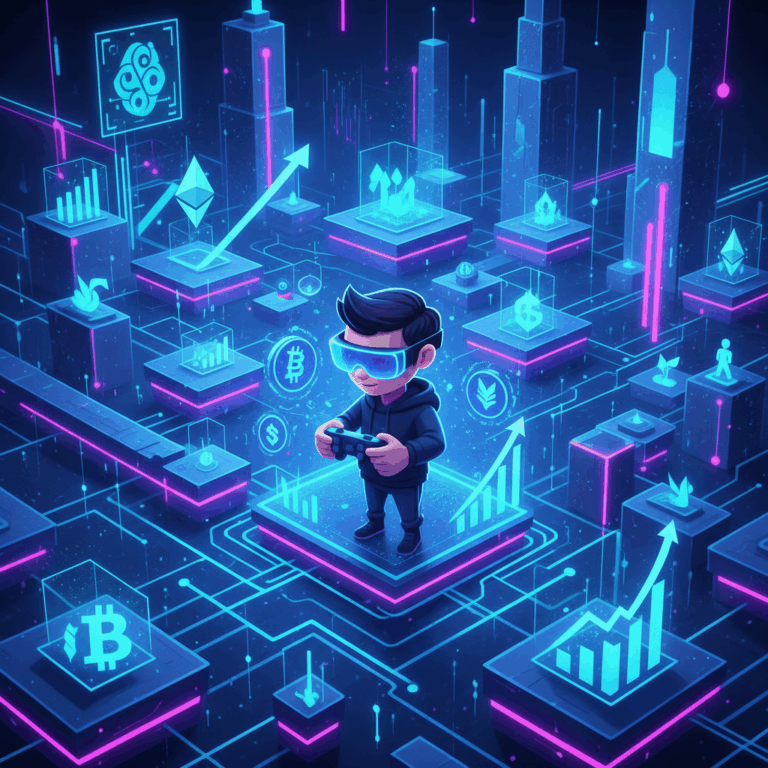
GameFi, a fusion of gaming and decentralized finance, enables players to truly own assets like characters and skins via NFTs, introducing real-world value to digital gameplay.
Anúncios
This evolution transforms gaming economies, empowering gamers with financial incentives previously unavailable in conventional gaming models.
Definition and Components of GameFi
GameFi stands for “game finance” and integrates decentralized finance (DeFi) principles into gaming, creating financial ecosystems within virtual worlds.
Anúncios
Players earn cryptocurrencies or NFTs by participating in tasks, leveling up, or trading assets on blockchain-secured platforms, enabling real economic benefits.
Key components include digital asset ownership, decentralized marketplaces, staking, and yield farming that provide passive income opportunities linked to gameplay.
NFTs and Digital Asset Ownership in Games
Non-fungible tokens (NFTs) represent unique digital assets such as skins, characters, or virtual land that players can securely own and trade on blockchain networks.
Unlike traditional games, blockchain gaming allows in-game items real-world value and cross-platform transferability, empowering players with true control over assets.
This shift in ownership models encourages player investment and participation, creating vibrant secondary markets and enhancing game economies.
Play-to-Earn Model and Its Market Impact
The play-to-earn (P2E) model revolutionizes gaming by allowing players to generate income through gameplay, turning fun into financial opportunity.
This approach contrasts with traditional gaming economies, shifting the dynamic from spending money to earning it via blockchain ownership and rewards.
P2E games integrate cryptocurrencies and NFTs, enabling players to trade digital assets and reap real economic benefits within the virtual world.
Comparison with Traditional Gaming Economies
Traditional gaming typically relies on pay-to-play or microtransactions, where players spend money but do not retain digital asset ownership.
In contrast, P2E games empower players with decentralized ownership of in-game items, which can be sold or traded across various marketplaces.
This fundamental shift adds a financial layer to gaming, incentivizing long-term engagement and investment beyond entertainment alone.
Popular Play-to-Earn Games and Their Features
Games like Axie Infinity, Alien Worlds, and Splinterlands have popularized P2E by combining NFT ownership with engaging gameplay features.
These titles offer players opportunities to earn tokens by battling, exploring virtual worlds, or trading rare items within blockchain-secured environments.
Features like breeding, staking, and decentralized marketplaces increase player control and financial potential in these ecosystems.
Financial Incentives and Cryptocurrency Earnings
P2E gamers earn cryptocurrency by completing quests, leveling up, or trading NFTs, providing new financial incentives absent in traditional games.
Players can also stake earned tokens or NFTs to generate passive income, deepening engagement and creating sustainable earning mechanisms.
This blend of gaming and finance attracts a diverse user base, expanding the gaming ecosystem with real-world economic value.
Challenges and Innovations in Blockchain Gaming
Blockchain gaming faces significant challenges including market skepticism and complex regulatory environments that can hinder widespread adoption.
Despite these hurdles, innovative approaches are emerging, blending traditional gaming with crypto elements to create more sustainable and accessible experiences.
These developments aim to bridge the gap between conventional gamers and blockchain enthusiasts, fostering broader acceptance.
Market Skepticism and Regulatory Issues
Many players and investors remain cautious about blockchain gaming due to concerns about volatility, scams, and unclear legal frameworks.
Regulatory bodies often struggle to classify blockchain games properly, leading to uncertainty around taxation, securities law, and consumer protections.
This ambiguity creates barriers for developers and players, delaying innovation and limiting potential growth in some regions.
Addressing these issues requires clearer guidelines and cooperation between regulators and the blockchain gaming industry to build trust.
Hybrid Models Combining Web2 and Crypto Elements
To overcome skepticism, developers experiment with hybrid models that merge familiar Web2 gameplay mechanics with blockchain rewards.
Examples include idle games mining Bitcoin or mobile titles integrating token trading, offering accessible crypto exposure without overwhelming new users.
These hybrids maintain engaging gameplay while gradually introducing decentralized features, easing users into the blockchain ecosystem.
Benefits of Hybrid Models
Hybrid models promote smoother adoption by blending proven entertainment with innovative finance, attracting both traditional and crypto-savvy gamers.
They also help create more stable economies, reducing risks associated with purely decentralized and speculative gaming assets.
Future Trends and Adoption Prospects
The future of blockchain gaming is marked by increasing adoption of cryptocurrency and NFTs, driven by growing interest from gamers and developers alike.
These technologies create new opportunities for player engagement, asset ownership, and financial rewards, promising to reshape the gaming landscape.
Additionally, the fusion of decentralized finance (DeFi) with gaming ecosystems paves the way for innovative economic models and deeper player involvement.
Growing Cryptocurrency and NFT Adoption in Gaming
More games are integrating cryptocurrencies and NFTs, enabling players to buy, sell, and trade assets with real-world value secured on blockchains.
This trend is accelerating as blockchain games attract mainstream users seeking to explore new digital economies and ownership models.
Experts predict mass adoption by the end of 2025, driven by engaging gameplay that combines entertainment with financial incentives.
Communities that foster loyalty and interaction are crucial in sustaining this growth, helping games maintain vibrant ecosystems beyond simple transactions.
Integration of DeFi Mechanisms in GameFi Ecosystems
DeFi protocols like staking and yield farming are increasingly woven into GameFi platforms, offering players passive income and complex financial strategies.
This integration enhances game economies by allowing players to earn rewards not only through gameplay but also through DeFi investments within the ecosystem.
By merging gaming with DeFi, developers create richer, more sustainable virtual economies that boost long-term player retention and engagement.