Anúncios
Understanding NFTs as an Investment
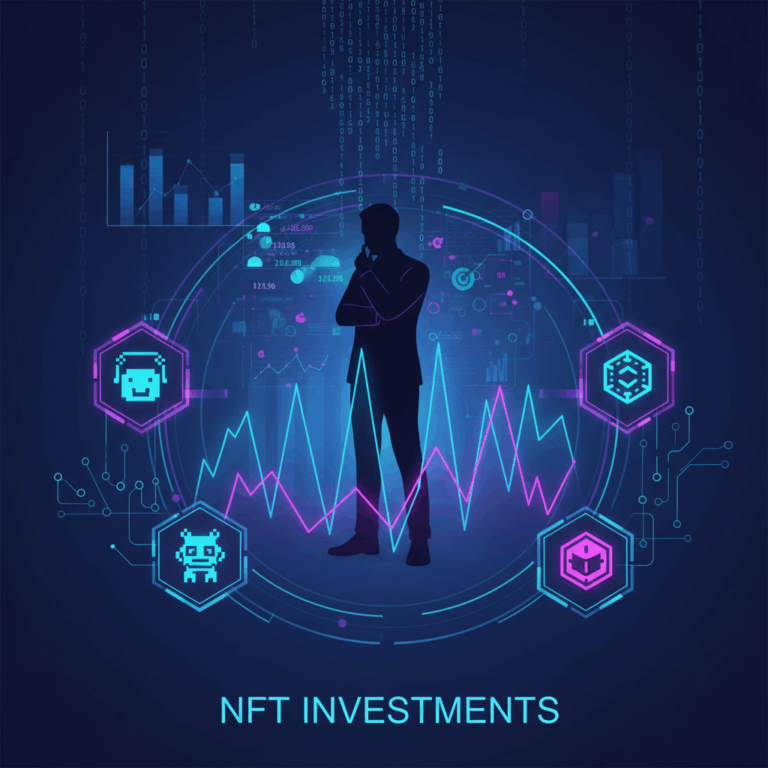
NFTs, or Non-Fungible Tokens, are unique digital assets verified through blockchain technology, ensuring authenticity and ownership of specific items.
They represent a novel type of investment, distinguished by their uniqueness and their ability to provide provenance, differentiating them from traditional assets.
Anúncios
Investors are attracted to NFTs for their potential appeal beyond collectibles, offering innovative uses and new market opportunities not found in conventional investments.
Definition and Unique Characteristics of NFTs
NFTs are digital tokens that are unique and cannot be exchanged on a one-to-one basis like cryptocurrencies, emphasizing their non-fungible nature.
Anúncios
These tokens certify ownership of digital or physical items and assure provenance, recorded immutably on the blockchain for transparency and security.
Key to NFT value is rarity, verifiable authenticity, and the strong connection to the underlying asset, making each NFT distinctly valuable.
Utility and Use Cases Beyond Collectibles
Beyond digital art and collectibles, NFTs hold utility by granting access to exclusive events, memberships, or specialized content, enhancing their investment appeal.
Hybrid NFTs link digital tokens to real-world assets such as luxury goods or real estate, bridging physical and digital ownership for innovative investment options.
Emerging NFT applications include integration with gaming, virtual reality, and AI, expanding the functional scope and use cases of this technology in various industries.
Market Evolution and Technological Trends
The NFT market has rapidly evolved, driven by continuous technological advancements and expanding use cases that go beyond digital collectibles.
These innovations contribute to a maturing marketplace, attracting both creators and investors seeking utility and value beyond speculative gains.
The convergence of technology and regulation is shaping the NFT landscape, promoting trust and stability in this emerging asset class.
Advancements in NFT Technology
Recent technological progress includes AI-powered NFTs, which enhance creativity by enabling dynamic and interactive digital assets that evolve over time.
Improved blockchain protocols have made NFT transactions more efficient, reducing costs and environmental impact while increasing security and scalability.
Interoperability across multiple blockchain networks allows NFTs to be utilized in diverse platforms, fostering broader adoption and innovative use cases.
These advancements collectively enhance the functionality and accessibility of NFTs, attracting more investors and expanding their market potential.
Regulatory Developments and Market Maturation
Governments and regulatory bodies are increasingly focusing on NFTs, aiming to establish clear guidelines that protect investors and support market growth.
This regulatory clarity is expected to reduce fraud and scams, which have hindered mainstream adoption and investor confidence in the past.
As regulations mature, markets are gravitating toward utility-driven NFTs rather than purely speculative assets, fostering sustainable investment environments.
Hybrid NFTs and Their Impact on Market Dynamics
Hybrid NFTs connect digital tokens with tangible assets like luxury goods or real estate, blending physical ownership and blockchain verification.
This fusion broadens the value proposition of NFTs, adding layers of trust, provenance, and utility that attract diverse investor profiles.
Innovative Market Opportunities
By bridging digital and real worlds, hybrid NFTs create new investment channels, supporting fractional ownership and enhancing liquidity options.
Risks Associated with NFT Investments
NFT investments come with inherent risks such as extreme volatility and difficulties in accurately assessing value due to a lack of standardized models.
Liquidity concerns arise because the market is relatively small and selling NFTs at fair prices can be challenging, increasing financial uncertainty for investors.
Moreover, fraud and scams remain significant threats, compounded by evolving regulatory frameworks that have yet to fully protect NFT investors.
Volatility, Valuation Challenges, and Liquidity Issues
The NFT market experiences high price swings, often driven by speculative hype, rarity perceptions, and subjective buyer interest.
There is no universal method to value NFTs, making price discovery complex and sometimes unpredictable for investors.
Liquidity is limited, as selling NFTs quickly without a substantial price concession can be difficult, particularly for less popular or niche assets.
Fraud, Scams, and Regulatory Concerns
The novelty of NFTs has created a fertile ground for scams and fraudulent schemes, impacting investor trust and market integrity.
Regulatory frameworks are still developing, which means many NFT transactions lack adequate oversight and protection against malpractice.
Investors need to be cautious and conduct thorough due diligence to avoid falling victim to counterfeit NFTs, phishing attacks, or misleading offers.
Strategies for Evaluating NFT Investments
Successful NFT investment demands careful evaluation of both creators and market forces to mitigate risks and capture value.
Understanding the reputation behind an NFT and analyzing community engagement can reveal the asset’s long-term potential and stability.
Additionally, staying up to date with market trends helps investors make informed decisions in a highly volatile environment.
Assessing Creator Reputation and Community Strength
The creator’s reputation is crucial as it influences demand and trustworthiness; renowned artists or brands often enhance NFT value.
Researching past work, authenticity, and the creator’s engagement with their audience helps verify legitimacy and potential growth.
Equally important is the community strength; active, supportive communities add liquidity by sustaining interest and secondary market activity.
Strong communities signal ongoing demand, reducing risks linked to price manipulation or sudden value drops due to waning interest.
Market Trends and Informed Investment Practices
Tracking market trends allows investors to identify rising sectors within the NFT space, such as gaming or utility-focused tokens.
Analyzing trading volumes, price movements, and emerging technologies supports the timing of entry and exit points for investments.
Combining data-driven insights with cautious diversification helps mitigate volatility and potential losses in this evolving market.