Anúncios
How Government Spending Stimulates Economic Growth
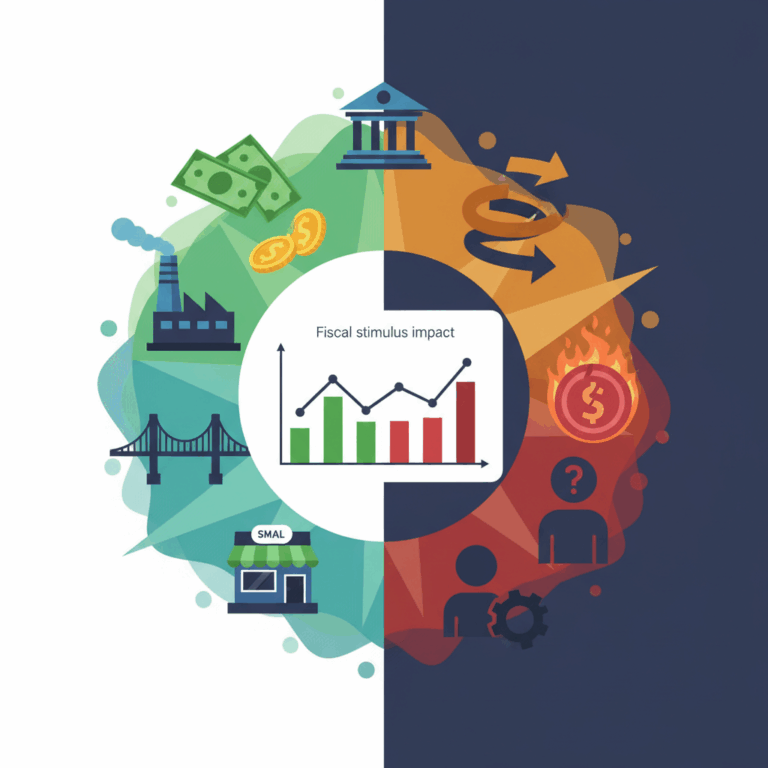
Government spending acts as a powerful fiscal stimulus by increasing demand for goods and services. This injection of funds can lead to higher production and job creation, boosting overall income levels.
When the government spends more on infrastructure, social programs, or aid, the economy benefits from increased activity. This effect is especially crucial during periods of weak private demand.
Anúncios
Mechanisms of Demand Increase Through Fiscal Stimulus
Fiscal stimulus increases demand by injecting money directly into the economy. Spending on programs creates jobs and income, encouraging consumers to spend more on goods and services.
This enhanced spending triggers a positive cycle: businesses produce more, hire additional workers, and further increase incomes, creating a multiplier effect that amplifies economic growth.
Anúncios
Programs like unemployment benefits have particularly high multipliers, as recipients typically spend funds quickly, supporting further economic activity swiftly.
Role of Fiscal Stimulus During Economic Downturns
During downturns, private sector demand tends to fall sharply, slowing economic growth. Fiscal stimulus helps fill this demand gap by boosting employment and output.
By supporting incomes and consumption, government spending shortens recessions and stabilizes the economy, reducing the severity and duration of economic contractions.
This targeted spending is essential in maintaining economic stability when private investment and consumer spending are insufficient to sustain growth.
Negative Effects of Excessive Government Spending
Excessive government spending can lead to several negative consequences that undermine economic stability. When spending exceeds the economy’s productive capacity, it may trigger inflationary pressures.
Higher inflation erodes purchasing power, making goods and services more expensive for consumers. This situation can compel central banks to increase interest rates, which dampens economic growth.
Inflation and Interest Rate Impacts
Rapid increases in government spending can push demand beyond supply limits, causing inflation to rise. This inflation reduces the real value of money, impacting consumers negatively.
As inflation rises, central banks often respond by raising interest rates to cool the economy. Higher rates increase borrowing costs, discouraging investment and slowing economic expansion.
The combination of inflation and higher interest rates can negate the intended benefits of fiscal stimulus, potentially stalling recovery or growth phases.
Public Debt and Crowding Out of Private Investment
Large, persistent government spending raises public debt levels, creating a burden on future budgets. High debts may require increased taxation or spending cuts later, limiting economic flexibility.
Moreover, increased government borrowing can crowd out private investment by pushing up interest rates. This competition for funds reduces capital available to businesses, slowing private sector growth.
Reduced private investment can hamper innovation and productivity improvements, affecting long-term economic prospects and competitiveness.
Risks of Poor Timing and Ineffective Targeting
Poorly timed fiscal stimulus—either too early or too late—can exacerbate economic imbalances rather than alleviate them. Stimulus during an already recovering economy risks overheating.
Similarly, inefficient targeting of spending reduces its impact, as funds may not reach sectors or populations that need support most. Misallocation leads to waste and limited growth stimulation.
Effective timing and precise targeting are crucial to avoid inefficient use of resources, prevent inflationary pressures, and ensure sustainable economic gains from fiscal stimulus.
Key Factors for Effective Fiscal Stimulus
The effectiveness of fiscal stimulus depends heavily on timing and duration. Well-timed interventions can quickly boost demand in weak economies.
Short, targeted spending tends to stimulate growth without risking inflation or long-term debt problems, making strategic implementation essential.
Importance of Timing and Duration
Fiscal stimulus works best when deployed early in a downturn and withdrawn as recovery begins. Delayed stimulus may miss the optimal boost window, reducing effectiveness.
Prolonged spending risks overheating the economy by causing inflation or increasing public debt levels, which can hinder growth over time.
Careful calibration of stimulus length prevents economic imbalances and helps maintain confidence in public finances, preserving future fiscal flexibility.
Targeting Spending for Maximum Impact
Effective stimulus directs funds to sectors and groups with the highest spending propensity, ensuring money quickly circulates in the economy.
Programs like unemployment benefits and direct aid tend to have high multipliers because recipients rapidly spend, amplifying demand and growth.
Precision in Fiscal Measures
Accurate targeting reduces waste and ensures that resources support those most affected by downturns, maximizing economic stabilization and recovery.
By focusing on vulnerable populations and key industries, governments can enhance the potency of fiscal stimulus while minimizing inflation risks.
Examples and Economic Multipliers
Various fiscal stimulus programs show different economic multipliers, reflecting how effectively each dollar spent boosts overall activity. Identifying high-impact programs helps optimize government spending.
Multipliers vary because some recipients spend funds immediately, leading to quicker economic circulation, while others may save or invest, altering the timing and magnitude of the stimulus effect.
High-Multiplier Programs like Unemployment Benefits
Unemployment benefits are a prime example of spending with a high economic multiplier. Recipients tend to spend their benefits rapidly on necessities, directly supporting businesses.
This quick spending enhances demand, causing ripple effects throughout the economy by maintaining consumption levels, which helps sustain jobs and production during downturns.
Such programs efficiently translate fiscal stimulus into immediate boosts in economic activity, making them crucial tools for stabilizing economies during recessions.
Amplification of Economic Activity Through Spending Recipients
The impact of fiscal stimulus is amplified when recipients spend funds quickly, creating a flow of money that increases demand repeatedly across sectors. This process strengthens overall economic growth.
As workers and businesses benefit from increased demand, they in turn spend more, sustaining a positive cycle of income and expenditure that extends beyond the initial government outlay.
Understanding who receives the stimulus and how they use it helps design policies that maximize economic amplification, improving the effectiveness of government interventions.